
Why Do Google Algorithm Updates Affect SEO?
Google’s algorithm changes impact website rankings in search results. This directly impacts a site’s visibility and the amount of traffic it receives. Changes often involve improvements in understanding user intent, contextual keyword analysis, and user experience factors like mobile-friendliness and page speed. These updates require businesses to stay adaptive, ensuring content relevance and adherence to Google’s evolving standards. Google discourages deceptive tactics. It focuses on promoting high-quality content. This approach ensures a level playing field for all participants.To align strategies effectively, continuous monitoring and an understanding of these updates are crucial, paving the way for enhanced marketing insight and success.
Key Takeaways
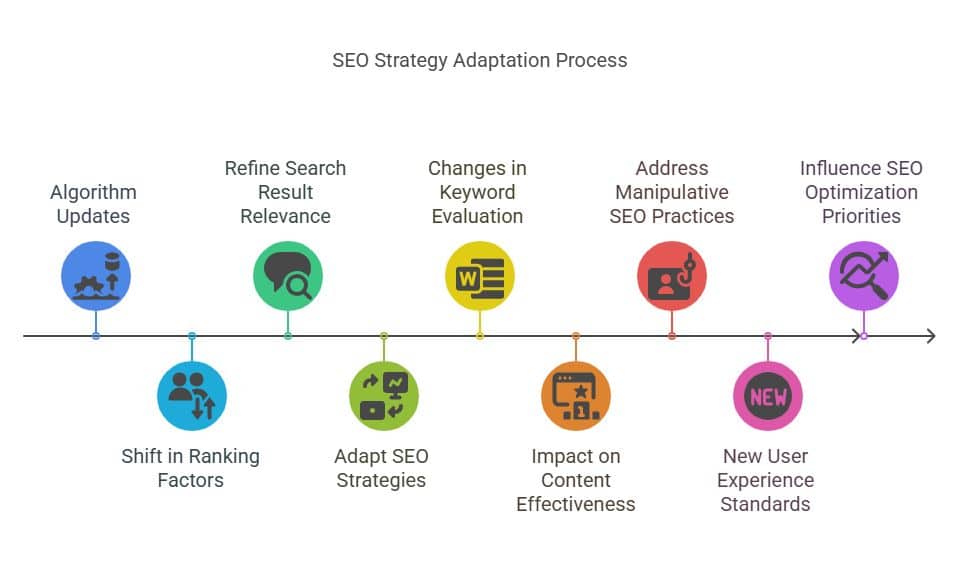
- Algorithm updates can shift ranking factors, impacting website visibility and traffic.
- Updates refine search result relevance, requiring SEO strategies to adapt for alignment.
- Changes to keyword evaluation can alter content’s effectiveness in ranking.
- Updates address manipulative SEO practices, affecting sites using unethical tactics.
- New user experience standards influence SEO optimization priorities, like mobile responsiveness and loading speed.
Understanding Google’s Algorithm
Understanding Google’s algorithm is crucial for anyone looking to navigate the ever-evolving landscape of search engine optimization (SEO). Google’s algorithm is intricate taking into account various elements to assess the pertinence & caliber of websites. It does not rely on a singular criterion but a constellation of factors that contribute to its evaluation process.
These factors include, but are not limited to, keywords, backlinks, user experience, and mobile-friendliness. The algorithm’s complexity is further enhanced by the integration of machine learning technologies, which allow Google to continuously refine its processes and understand user behavior more effectively.
A critical element within Google’s algorithm is the concept of search intent. Understanding search intent involves deciphering what users are actually looking for when they type a query into the search engine. This focus on user intent aligns with Google’s mission to deliver the most relevant and high-quality results.
To achieve this, the algorithm assesses not just the keywords used, but the context and potential meanings behind them, thereby ensuring that the search results match the user’s needs.
Data privacy has become an increasingly important consideration in the development of Google’s algorithm. As algorithms evolve, ensuring the protection of personal data while still providing personalized search experiences is paramount.
Google’s commitment to data privacy means that while the algorithm leverages vast amounts of data to improve search results, it also incorporates measures to safeguard user information.
Importance of Algorithm Transparency
While grasping Google’s algorithm is vital for effective SEO, the significance of algorithm transparency cannot be overstated. Transparency provides algorithm clarity, ensuring that businesses and SEO professionals can align their strategies with Google’s expectations. This alignment is crucial because update frequency is unpredictable, and without a clear understanding of changes, businesses may experience unexpected fluctuations in their search engine rankings.
Algorithm transparency fosters user trust by allowing businesses to make informed decisions that adhere to industry standards. When Google communicates its updates effectively, it empowers website owners to adjust their content and technical practices accordingly. These communication strategies are essential to maintain a balanced digital ecosystem, where businesses can thrive without the fear of sudden algorithmic penalties.
Below is a table illustrating the elements of algorithm transparency and its significance:
| Element | Significance |
| Algorithm Clarity | Ensures businesses can align strategies |
| Update Frequency | Helps anticipate changes and adapt strategies |
| Communication Strategies | Provides clear guidance for necessary actions |
| User Trust | Builds confidence in Google’s search practices |
| Industry Standards | Ensures a fair and competitive online landscape |
Impact on Search Rankings

The impact of algorithm updates on search rankings is a critical aspect of SEO that demands close attention. Such updates often result in ranking fluctuations, directly influencing a website’s visibility and traffic. Understanding these shifts is essential for SEO professionals striving to align content with Google’s evolving criteria.
A primary factor influenced by algorithm updates is search intent. Google’s algorithms are refined to better interpret the user’s intent behind a query, aiming to deliver the most relevant results. This underscores the importance of keyword relevance; content must adequately address the queries users are genuinely interested in to maintain or improve its ranking.
As search engines become more adept at discerning user intent, SEO strategies must prioritize creating content that not only answers these queries but does so in a manner that is comprehensive and precise.
Algorithm biases can also play a role in ranking fluctuations. While these biases are not intentional, they emerge from the algorithm’s design and training data, sometimes skewing results toward certain types of content or sources. SEO practitioners must remain vigilant, ensuring diverse and unbiased approaches to content creation.
Content freshness is another critical element impacted by updates. Google’s algorithms tend to favor up-to-date content, which implies that websites offering regularly updated information are more likely to rank higher.
This makes it imperative for businesses to consistently refresh their content to retain relevance.
User Experience Enhancements

User experience has become a pivotal element in Google’s algorithm updates, reflecting the search giant’s commitment to delivering quality interactions on the web. This emphasis on user experience is not merely cosmetic; it significantly influences how websites are ranked, urging webmasters to prioritize their site’s usability and accessibility.
The evolving criteria focus on several key aspects that enhance user satisfaction and engagement, aligning with contemporary expectations of digital interaction.
To ensure a superior user experience, Google emphasizes the following elements:
- Loading Speed Improvements: A critical factor in retaining users, faster loading times are rewarded in rankings. Websites must optimize their assets, minimizing delays to enhance user satisfaction and reduce bounce rates.
- Mobile Responsiveness Factors: As mobile browsing surpasses desktop usage, sites need to adapt seamlessly across devices. Ensuring that content is accessible and visually appealing on smartphones and tablets is crucial for maintaining relevance.
- Website Navigation Optimization: Intuitive and straightforward navigation structures improve user engagement strategies by enabling visitors to find information effortlessly. Clear menus and well-organized content guide users through the site, enhancing their overall experience.
- Accessibility Enhancements: Google values inclusivity, encouraging sites to adopt features that cater to users with diverse needs, such as screen readers and keyboard navigation. These enhancements not only broaden a site’s audience but also improve its search engine visibility.
Quality Content and Relevance

Crafting quality content that resonates with user intent is a fundamental pillar of Google’s algorithm updates, underscoring the importance of relevance in search engine optimization. As Google’s algorithms evolve, they increasingly focus on assessing content authenticity, ensuring that the material presented to users is both reliable and pertinent to their queries.
This shift places a premium on content creators to not only engage in keyword optimization but to do so in a manner that enhances the overall narrative and depth of their content.
Relevance metrics are at the core of Google’s strategy to deliver meaningful search results. These metrics evaluate how well a piece of content aligns with a user’s search intent and how effectively it addresses the query.
By incorporating content diversity, creators can ensure a comprehensive approach, providing multiple perspectives and a variety of information formats—such as text, images, and videos—that cater to different user preferences and learning styles. Such diversity not only enriches the user experience but also aligns with the algorithm’s aim to prioritize well-rounded, multifaceted content.
In navigating the landscape of SEO, understanding the intricate balance between content authenticity and keyword optimization is crucial. Rather than overloading content with keywords, it is more effective to seamlessly integrate them into a narrative that naturally fits user intent.
This approach ensures not only higher rankings in search results but also fosters trust and engagement with the audience. Ultimately, maintaining relevance in content is about creating meaningful, user-centric experiences that align with the ever-evolving criteria of Google’s algorithms.
Combatting Manipulative Practices

In the dynamic world of search engine optimization, tackling manipulative practices has become increasingly vital to maintain the integrity of search results.
As search engines strive to deliver relevant and high-quality content to users, they must combat unethical tactics such as black hat SEO. These manipulative methods aim to deceive search algorithms to gain unfair rankings, often at the expense of genuine content creators who adhere to ethical SEO practices.
Google algorithm updates serve as a critical tool in identifying and penalizing these deceitful activities.
To address such manipulative practices, Google employs algorithm penalties that target several common tactics:
- Link Schemes: Creating or buying links to manipulate PageRank is a direct violation of Google’s guidelines. Such link schemes can result in severe penalties, which can significantly impact a site’s visibility in search results.
- Content Farming: Websites that produce large quantities of low-quality content to rank higher can be flagged by updates like Google Panda. This ensures that users receive valuable and relevant information rather than keyword-stuffed nonsense.
- Cloaking: Displaying different content to search engines than to users is a deceptive practice that can lead to a site’s removal from the index altogether.
- Keyword Stuffing: Overloading keywords within content to manipulate rankings not only leads to poor user experience but also invites penalties from search engines.
Adapting SEO Strategies

As search engines continually refine their algorithms to counteract manipulative practices, it becomes imperative for website owners and digital marketers to adapt their SEO strategies accordingly.
One of the foundational approaches to maintaining visibility in search engine results is keyword diversification. By expanding the range of keywords, websites can capture a broader audience, ensuring they remain relevant across various search queries. This strategy is particularly beneficial as algorithms increasingly favor content that appears natural and contextually rich.
Local SEO has surged in importance, especially with the rise of mobile search. Tailoring content to local audiences by including location-specific keywords and ensuring accurate business listings can significantly enhance a website’s relevance in localized searches. This focus on local SEO ensures businesses meet the growing demand for geographically targeted information.
Voice search is another area demanding attention. With the proliferation of smart devices, optimizing content for voice queries, which tend to be longer and conversational, can provide a competitive edge. This requires a shift from traditional keyword targeting to more natural language processing.
Mobile optimization remains a critical component of any adaptive SEO strategy. As more users access the web via mobile devices, ensuring that websites are responsive and load efficiently on smaller screens is essential for maintaining search rankings.
Lastly, implementing schema markup can greatly enhance a website’s visibility. By providing search engines with structured data, websites can achieve rich results, such as enhanced snippets, which improve click-through rates and user engagement.
Adapting to these areas ensures that SEO strategies align with evolving search engine requirements, safeguarding long-term digital presence.
Monitoring Algorithm Changes

Google’s frequent algorithm updates necessitate vigilant monitoring to ensure that SEO strategies remain effective and compliant with the latest standards. With the ever-evolving landscape of search engine optimization, staying informed and responsive to changes is crucial.
Algorithm tracking is a critical aspect of this process, allowing SEO professionals to swiftly identify and adapt to shifts in Google’s ranking criteria. Understanding the update frequency is equally important, as it helps in anticipating when changes might occur and preparing accordingly.
Monitoring tools play a pivotal role in this continuous process. They provide insights into ranking fluctuations, enabling businesses to gauge the impact of algorithm updates on their websites. These tools facilitate data analysis, which is essential for diagnosing and addressing issues that may arise due to these updates.
A methodical approach to monitoring algorithm changes can be broken down into several key steps:
- Utilize Monitoring Tools: Leverage platforms like Google Analytics, Moz, or SEMrush to track performance metrics and identify patterns over time.
- Analyze Data Regularly: Conduct regular data analysis to spot trends and anomalies in website performance, which may indicate an algorithm update.
- Stay Informed About Update Frequency: Keep abreast of industry news and official announcements from Google to understand the cadence of updates.
- Assess Ranking Fluctuations: Monitor changes in search rankings closely following an update to determine its impact on your SEO efforts.
Surviving Major Updates

Navigating the landscape of SEO requires not just monitoring but also a strategic response to major algorithm updates. When Google rolls out significant changes, the impact can be immediate and profound, potentially disrupting established rankings. To sustain and even improve your website’s visibility, employing update survival tactics is essential. This begins with algorithm adaptation strategies, which involve staying informed about the nature of the update and understanding its implications on search engine results pages (SERPs).
A critical component of surviving major updates is implementing robust content optimization techniques. This means ensuring that content is not only relevant and high-quality but also aligned with Google’s evolving standards. Regularly auditing your content for relevance, keyword usage, and user engagement can help maintain alignment with algorithmic expectations.
Additionally, focusing on technical SEO elements such as site speed, mobile-friendliness, and secure connections can further bolster your site’s defense against negative impacts.
SEO resilience planning is another crucial aspect of enduring algorithm changes. This involves building a diversified traffic strategy that reduces dependency on any single source, thereby mitigating the risk of traffic loss. By investing in multiple channels, such as social media and email marketing, websites can better withstand fluctuations in organic search traffic.
Should an update negatively affect rankings, swift and informed ranking recovery methods are vital. This includes analyzing data to identify specific areas of decline and implementing corrective actions. Engaging with the SEO community and leveraging tools that provide insights into algorithm changes can also support a more rapid recovery, ensuring that your online presence remains robust and competitive.
Future of SEO and Algorithms

The future of SEO and algorithms is poised for transformative developments as search engines continue to evolve in complexity and capability. As these technologies advance, SEO strategies must adapt to ensure content remains visible and relevant.
One of the most significant changes will be driven by AI advancements, which enhance search engines’ ability to understand context and user intent, making content quality and relevance more crucial than ever.
Voice search is another game-changer, with more users relying on voice-activated devices to access information. This trend necessitates a shift in keyword strategy, focusing on natural language and conversational queries. As voice search grows, optimizing for these patterns will become indispensable.
Mobile optimization remains critical as mobile devices dominate internet usage. Websites must ensure fast loading times and seamless mobile experiences to meet user expectations and search engine criteria. Effective mobile optimization is key to maintaining competitive rankings in search engine results.
Local SEO is increasingly important as consumers seek information that is geographically relevant. Businesses can enhance their local search presence by optimizing for location-based keywords and ensuring their Google My Business profiles are up-to-date. This strategy is essential for organizations targeting local markets.
Video content continues to gain prominence, with search engines prioritizing multimedia in search results. Embracing video as part of an SEO strategy can improve engagement and visibility.
To stay ahead, consider the following:
- Leverage AI advancements to refine content strategies.
- Optimize for voice search by focusing on natural language.
- Prioritize mobile optimization for seamless user experiences.
- Enhance local SEO to capture geographically relevant audiences.
These strategies are imperative for navigating the evolving landscape of SEO and algorithms.
Final Thoughts
Google algorithm updates have a profound impact on SEO, necessitating continuous adaptation and strategy refinement to maintain and enhance website visibility. These updates, aimed at improving search intent accuracy, user experience, and content quality, push marketers and SEO professionals to prioritize ethical practices and high-value content. The evolving landscape emphasizes the importance of staying informed, leveraging robust monitoring tools, and being proactive in adapting to mobile-first indexing, voice search trends, and user experience enhancements.
Looking to stay ahead of algorithm changes and keep your SEO strategies resilient? Connect with Syville Gacutan, an experienced SEO Specialist in the Philippines. Get expert insights, proactive strategies, and hands-on support to navigate Google’s evolving landscape and maintain your site’s visibility. Let’s future-proof your SEO—reach out today!