
3 Best SEO Tactics for Latest Algorithm Changes
To navigate the latest algorithm changes effectively, prioritize high-quality content that directly addresses user queries while incorporating relevant keywords and multimedia to boost engagement. Make the website faster. Make it easy to move around. Add nice pictures and things users can click on. This approach not only attracts users but also signals value to search engines. Finally, embrace mobile-first indexing by ensuring your website is responsive and optimized for mobile devices, including implementing Accelerated Mobile Pages (AMP) and accommodating voice search. The mentioned approaches will adjust to existing algorithms and simultaneously guarantee your website stays competitive and easily findable. Explore how these measures can further enhance your SEO.
Key Takeaways
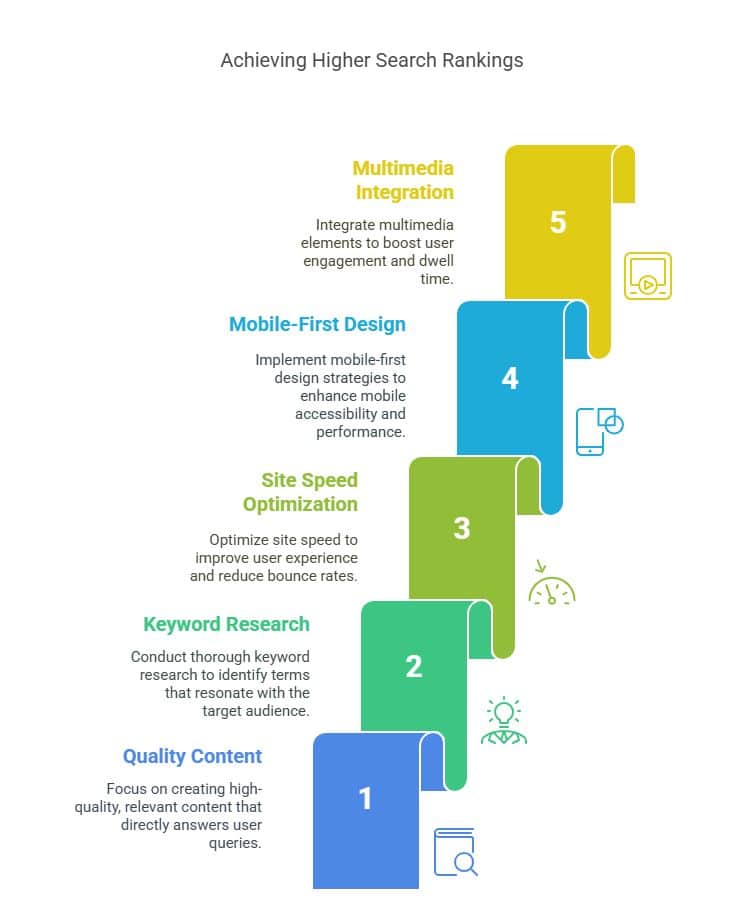
- Focus on high-quality, relevant content that directly answers user queries to align with algorithm priorities.
- Conduct thorough keyword research to identify terms that resonate with the target audience’s needs and search behavior.
- Ensure site speed optimization to improve user experience and reduce bounce rates, favoring higher search rankings.
- Implement mobile-first design strategies, including responsive design and AMP, to enhance mobile accessibility and performance.
- Integrate multimedia elements like images and videos to boost user engagement and dwell time on your site.
Focus on Quality Content

In the ever-evolving landscape of search engine optimization, focusing on quality content is paramount for staying aligned with the latest algorithm changes. As technology advances computer programs become smarter. These programs now focus on showing users information that is closely related to what they are searching for. The goal is to provide answers that directly match the user’s question or topic of interest. This necessitates a robust keyword research strategy to identify the terms and phrases most pertinent to your audience, facilitating the creation of content that meets their needs and enhances visibility in search engine results.
Keeping the audience interested is very important for good content. Engaging content not only attracts readers but also encourages them to interact with it, whether through comments, shares, or likes. This interaction signals to search engines that the content is valuable, potentially boosting its ranking.
Incorporating diverse media formats, such as images, videos, and infographics, through multimedia integration, can significantly enhance engagement levels by catering to varied user preferences and making content more dynamic and accessible.
The notion of content freshness also plays a crucial role in maintaining relevance and visibility. Regularly updating existing content or consistently publishing new material signals to search engines that a site is active and up-to-date, which can positively impact rankings.
Fresh content can reflect recent developments or emerging trends, ensuring that the information remains pertinent to the audience.
Optimize for User Experience

Enhancing user experience is a critical component of modern SEO strategies, especially in light of ongoing algorithm updates. Search engines increasingly prioritize websites that offer seamless user interactions, making it imperative for businesses to focus on key aspects that contribute to user satisfaction. Core elements such as site speed, intuitive navigation, and engaging visuals are now fundamental to optimize not only for visibility but also for retaining visitor interest.
| Component | Importance | SEO Impact |
| Site Speed | Fast loading times | Lower bounce rates, higher rankings |
| Intuitive Navigation | User-friendly site structure | Improved user retention, reduced exit rates |
| Engaging Visuals | Attractive design elements | Enhanced user engagement, better dwell time |
| Accessibility Standards | Inclusive design | Broader audience reach, compliance benefits |
| Interactive Elements | Dynamic user interactions | Increased user interaction, stronger site metrics |
Site speed is a pivotal factor. A sluggish website can deter visitors, driving them to competitors. Ensuring quick load times is crucial, as it directly influences bounce rates and overall rankings. Meanwhile, intuitive navigation allows users to find information effortlessly, reducing frustration and increasing time spent on the site.
Engaging visuals can captivate users, encouraging them to explore content further. Employing high-quality images and thoughtful design enhances the user interface, making a lasting impression. Additionally, adhering to accessibility standards ensures that all users, including those with disabilities, can access and interact with the website, thus expanding the potential audience.
Embrace Mobile-First Indexing
As search engines evolve, adapting to mobile-first indexing becomes paramount for maintaining visibility and competitiveness. This shift underscores the necessity for businesses to prioritize mobile optimization techniques in their SEO strategies. The prevalence of mobile devices in daily life means that websites must provide seamless user experiences across all platforms.
Utilizing responsive design strategies ensures that web pages adapt to varying screen sizes and orientations, thereby improving accessibility and engagement.
Additionally, the implementation of Accelerated Mobile Pages (AMP) can offer significant benefits. AMP enhances page load speeds on mobile devices, a factor crucial for reducing bounce rates and improving user retention. In a digital landscape where milliseconds matter, faster load times can directly impact search engine rankings and user satisfaction.
Understanding mobile user behavior is another critical component of embracing mobile-first indexing. Users often exhibit different browsing habits on mobile devices compared to desktops, including increased reliance on voice search integration. As voice-activated assistants like Siri and Google Assistant become more prevalent, optimizing content for voice queries can enhance discoverability and cater to emerging user preferences.
Ultimately, embracing mobile-first indexing involves a holistic approach to SEO that considers the nuances of mobile user engagement. By employing mobile optimization techniques, responsive design strategies, and AMP implementation benefits, businesses can align their online presence with current user expectations and search engine requirements.
Incorporating insights into mobile user behavior and voice search integration further ensures that websites remain competitive and relevant in an ever-evolving digital ecosystem. With these strategies, businesses can effectively navigate the mobile-first world and sustain their online visibility.
Final Thoughts
Adapting to the latest algorithm changes in SEO requires a proactive approach that prioritizes user experience, high-quality content, and mobile optimization. Focusing on creating content that answers user queries and incorporating relevant keywords, multimedia, and regular updates can drive engagement and visibility. Ensuring site speed, intuitive navigation, and accessibility are key to enhancing user satisfaction and maintaining competitiveness. Embracing mobile-first indexing through responsive design, AMP, and voice search readiness positions businesses to meet modern user expectations and align with search engine priorities.
Need help navigating the latest SEO algorithm changes? Connect with Syville Gacutan, an experienced SEO Specialist in the Philippines. Get expert guidance on optimizing your content, improving user experience, and embracing mobile-first strategies. Let Syville help you boost your website’s visibility and achieve long-term digital success. Contact Syville Gacutan today!