
Navigating SEO: Adapting to Google Algorithm Changes
Navigating SEO amid Google’s algorithm changes demands a proactive approach. Businesses need to know about updates. These updates can greatly change website rankings and traffic. Embracing a dynamic SEO strategy involves regular keyword refinement, technical audits, and competitor analysis. Tools like SEMrush offer valuable insights for forecasting algorithm impacts. Engaging with the SEO community can provide shared insights and strategic advice. Focus on making high-quality content. Ensure your website works well on mobile devices. Pay attention to technical aspects of search engine optimization. These steps will help you meet Google’s changing requirements. By adopting these strategies, businesses can ensure sustained visibility and performance; exploring this further could transform SEO outcomes.
Key Takeaways
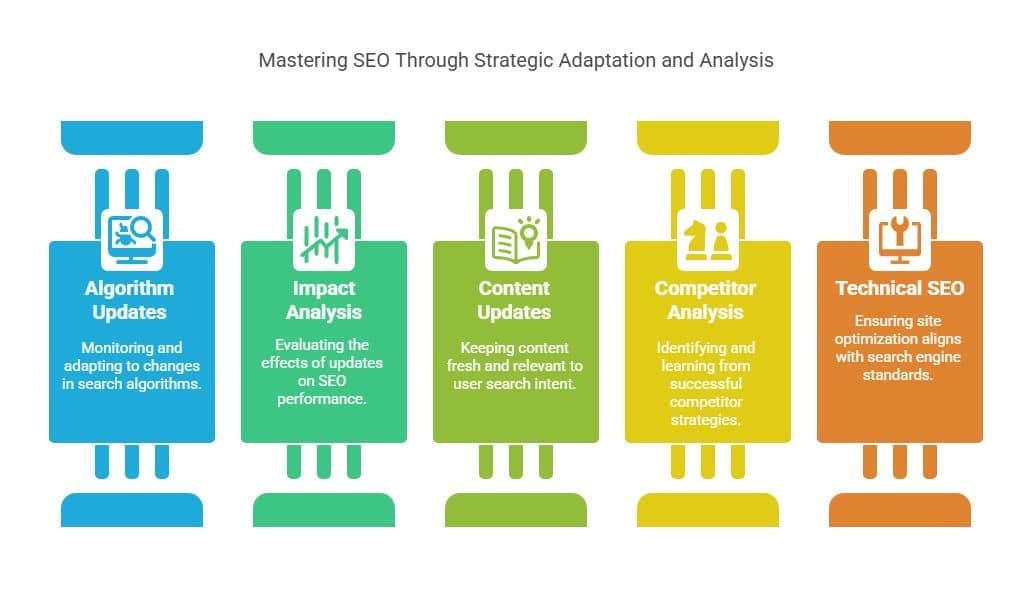
- Stay informed on algorithm updates with tools like MozCast and SEMrush Sensor for timely strategy adjustments.
- Regularly analyze the impact of updates to refine SEO tactics and maintain rankings.
- Continuously update content to align with changing user search intent and enhance relevance.
- Engage in competitor analysis to identify successful strategies and areas for improvement.
- Prioritize technical SEO audits to ensure site optimization aligns with Google’s standards.
Understanding Google Algorithm Updates
Google’s algorithm changes play a major role in the constantly shifting world of search engine optimization. These updates impact how websites rank and perform in search results. These updates dictate how websites are ranked on search engine results pages (SERPs), thereby influencing the visibility and traffic a site receives. The update frequency of Google’s algorithms varies, with some updates occurring daily while others are significant overhauls introduced sporadically.
Understanding the update history is essential for SEO professionals, as it provides insight into the evolution of ranking factors and the shifting priorities of Google’s search algorithms.
There are several algorithm types that Google employs to enhance search results. Core updates, for instance, are broad changes that affect the overall search landscape, while more specific updates target particular elements, such as the Panda update for content quality or the Penguin update for link evaluation.
Every update aims to enhance the search process. The goal is for users to discover the most pertinent & trustworthy data.
Ranking factors are the criteria used by these algorithms to determine the order of search results. They encompass a wide array of elements, from on-page content and keyword usage to backlinks and mobile-friendliness.
A crucial component of these factors is aligning search results with user search intent, which refers to the purpose behind a user’s query. By comprehending these elements, SEO practitioners can better anticipate the impact of algorithm changes and adapt their strategies accordingly.
Understanding these nuances enables a more informed approach to maintaining and improving a website’s search ranking amidst ongoing algorithmic evolution.
Importance of Staying Informed

In the dynamic world of search engine optimization, staying informed is paramount for any SEO professional seeking success. The landscape of SEO is constantly evolving, driven by changes in Google’s algorithms that can significantly impact website rankings. To navigate these shifts effectively, it is crucial to remain up-to-date with the latest SEO trends and developments.
Understanding algorithm history provides valuable insights into Google’s past priorities, enabling professionals to anticipate future changes. Keeping abreast of industry news is essential for recognizing emerging patterns and shifts in search intent. This knowledge allows SEO experts to adapt strategies proactively, ensuring that content remains relevant and aligned with user expectations.
By analyzing competitor strategies, one can gain insights into successful tactics and identify areas for improvement in one’s own approach. Competitor analysis serves as a vital tool for benchmarking performance and understanding the broader competitive landscape.
Moreover, staying informed empowers SEO professionals to make data-driven decisions, optimizing content and technical aspects of websites to meet evolving search engine criteria. It is not merely about reacting to changes but anticipating them, thereby maintaining a competitive edge.
Engaging with industry forums, subscribing to reputable SEO publications, and participating in webinars or conferences are effective ways to stay connected with the latest developments. Ultimately, the importance of staying informed cannot be overstated.
It is the foundation upon which successful SEO strategies are built, ensuring that one’s digital presence remains robust and visible amidst the ever-changing algorithms of search engines. By prioritizing continuous learning and adaptability, SEO professionals can thrive in a rapidly changing digital landscape.
Monitoring Algorithm Change Alerts

Monitoring algorithm change alerts is a critical aspect of maintaining an effective SEO strategy. With the frequent updates to Google’s algorithms, staying informed through reliable notification systems is essential. These systems allow SEO professionals to quickly adapt their strategies, ensuring sustained website performance and visibility.
A proactive approach to monitoring involves leveraging a combination of algorithm tracking tools, which provide timely alerts and insights into changes.
To effectively monitor algorithm changes, consider the following strategies:
- Utilize Algorithm Tracking Tools: These tools are designed to track updates and notify users of any significant shifts. They serve as a vital resource for understanding how algorithm changes may affect your site’s performance metrics. Tools such as MozCast and SEMrush Sensor can be instrumental in this process.
- Analyze Historical Trends: Understanding past algorithm updates and their impacts can provide valuable insights. Historical data helps predict potential future changes and guides adjustments to your SEO strategy accordingly. This analysis can be done using tools like Google Analytics and Search Console.
- Engage with Community Insights: The SEO community often shares insights and experiences regarding recent updates. Engaging in forums and discussions can offer a broader perspective on how changes might influence different industries, offering practical advice and solutions.
- Implement Robust Notification Systems: Setting up alerts for algorithm changes ensures immediate awareness. This allows for prompt action, minimizing any negative impacts on your site’s rankings and traffic. Notifications can be configured through various platforms, including email alerts and social media channels.
Analyzing Update Impacts

Understanding the implications of algorithm updates is crucial for optimizing SEO strategies effectively. Google’s algorithm updates, in their varying update frequency, can significantly impact website ranking positions and visibility. These updates often lead to ranking fluctuations, which can be challenging to interpret without a systematic approach.
To mitigate potential negative consequences, it is essential to engage in comprehensive competitor analysis and closely monitor traffic patterns after each update.
Competitor analysis serves as a vital tool in understanding how algorithm changes affect the broader industry landscape. By examining competitors’ performance, one can gain insights into what factors have been favored or penalized by the latest updates. This can help identify shifts in search intent that may have prompted the algorithmic changes, allowing for a more informed response to these updates.
Monitoring traffic patterns is equally important in assessing the impact of algorithm updates. A sudden drop or surge in traffic can signal how an update has influenced your website’s visibility. Analyzing these patterns can help isolate specific pages or content types that have been affected, aiding in pinpointing areas needing adjustment.
Furthermore, understanding the nature of ranking fluctuations post-update can provide valuable clues about the update’s focus. Whether it pertains to content quality, user experience, or technical SEO factors, knowing these details allows for strategic fine-tuning of your website.
Adapting Your SEO Strategies

A dynamic approach is essential in adapting your SEO strategies to the ever-evolving landscape of Google’s algorithm updates. As search engines refine their processes, it’s crucial to remain agile and informed. Here are several strategies you can employ to ensure your SEO efforts remain effective:
- Keyword Research Techniques: Continuously refine your keyword research to stay relevant. Utilize tools that offer insights into search trends and volumes. Prioritize long-tail keywords, as they often face less competition and align more closely with user intent.
- Competitor Analysis Strategies: Regularly assess the SEO tactics of your competitors. Analyze their backlink profiles, content strategies, and keyword rankings. This will help you identify gaps in your own approach and find opportunities to outperform them.
- Local SEO Tactics: Optimize your presence for local search by ensuring your business information is accurate across all platforms. Utilize Google My Business to enhance local visibility, and encourage customer reviews to boost your credibility and search rankings.
- Mobile Optimization Trends: With the rise of mobile-first indexing, ensure your website is mobile-friendly. This involves responsive design, fast loading times, and an intuitive user interface. Google prioritizes mobile-optimized sites, making this a critical component of your strategy.
Additionally, as voice search continues to grow, consider incorporating voice search optimization into your overall strategy. This may involve creating content that aligns with natural language queries and optimizing for question-based searches.
Successfully adapting your SEO strategies requires vigilance and a willingness to embrace change. By focusing on these key areas, you can better navigate the complexities of Google’s algorithm updates and maintain a competitive edge.
Content Quality and Relevance

Elevating content quality and relevance is paramount in the ever-changing SEO landscape. As Google continuously refines its algorithms, creating content that not only resonates with the audience but also satisfies search engine criteria is essential. A critical component of this strategy is ensuring content freshness. Regularly updating content to reflect the latest information not only keeps the audience informed but also signals to Google that the content is current and worthy of higher rankings.
Keyword diversity is another essential element. While keywords remain a fundamental aspect of SEO, over-reliance on a narrow set can lead to diminished returns. By diversifying keywords, content creators can capture a broader range of search queries, thus enhancing visibility and relevance. However, it is crucial to maintain a natural flow and avoid keyword stuffing, which can detract from user experience and engagement.
Audience engagement is significantly influenced by multimedia integration. Incorporating images, videos, and interactive elements can enrich the user experience, making the content more appealing and accessible. Such integration not only caters to varied audience preferences but also encourages longer site visits, thus improving SEO performance.
Topical authority is established by consistently producing comprehensive, well-researched content that positions the author as a trusted source within a specific niche. This involves delving deeply into subjects and covering them from multiple angles, which builds credibility and encourages repeat visits from users seeking reliable information.
Leveraging Technical SEO
Diving into the realm of technical SEO, one quickly recognizes its crucial role in enhancing a website’s performance and visibility in search engine results.
Technical SEO focuses on optimizing a website’s infrastructure, ensuring that search engines can crawl and index it efficiently. A well-executed technical SEO strategy can significantly improve a site’s ranking, making it an essential component of any comprehensive SEO plan.
To leverage technical SEO effectively, it is important to focus on the following key areas:
- Technical Audits: Regular technical audits are vital to identify issues like broken links, duplicate content, and crawl errors. These audits provide a roadmap for improvements and ensure that the website remains search engine-friendly.
- Site Speed: Google considers site speed a ranking factor. Faster loading sites enhance user experience and are favored by search engines. Tools like Google PageSpeed Insights can help identify areas for speed optimization.
- Mobile Optimization: With the rise of mobile internet usage, ensuring a site is mobile-friendly is non-negotiable. Google’s mobile-first indexing means that the mobile version of your site is considered the primary version, so it needs to be fully optimized.
- Structured Data and Schema Markup: Implementing structured data and schema markup can significantly enhance search visibility. They help search engines understand the context of your content, improving the chances of appearing in rich snippets.
Enhancing User Experience

Building on the foundation established by a robust technical SEO strategy, the next step in optimizing a website involves focusing on enhancing the user experience. The importance of user engagement cannot be overstated; it directly correlates with how users interact with a website, influencing dwell time and conversion rates.
To achieve this, website speed is paramount. Slow-loading pages can deter visitors, negatively impacting user engagement and, consequently, search engine rankings. Tools such as Google PageSpeed Insights can help identify and rectify issues slowing down a site, ensuring it meets optimal performance standards.
In the era of smartphones, mobile optimization is no longer optional but essential. A significant portion of web traffic now originates from mobile devices, making it crucial for websites to be responsive and visually appealing across various screen sizes.
Implementing a mobile-first design approach can significantly enhance the user experience, accommodating the growing mobile user base.
Moreover, adhering to accessibility standards is vital in ensuring that websites are usable by individuals with disabilities, thereby broadening the audience base. By incorporating accessibility features such as screen reader compatibility, keyboard navigation, and alt text for images, websites can offer an inclusive experience for all users.
Lastly, user feedback provides invaluable insights into how well a website meets user expectations. Regularly soliciting and analyzing feedback can reveal areas for improvement, enabling continuous enhancement of the user experience.
Building High-Quality Backlinks

In the realm of search engine optimization, a website’s authority is significantly bolstered by the quality of its backlinks, essentially acting as endorsements from other reputable sites.
Building high-quality backlinks requires strategic planning and a nuanced understanding of various link building strategies. It’s not merely about quantity but rather the relevance and credibility of the sources linking to your site.
To effectively enhance your backlink profile, consider the following strategies:
- Competitor Analysis: Begin by examining the backlink profiles of top competitors. Tools like Ahrefs or Moz can reveal where their links are coming from, allowing you to identify potential opportunities for your site.
- Guest Posting: Contribute valuable content to authoritative websites in your niche. Guest posting not only helps in gaining backlinks but also enhances your brand visibility and credibility in the industry.
- Outreach Techniques: Develop personalized outreach campaigns to connect with bloggers, journalists, and industry leaders. Crafting compelling pitches that highlight the mutual benefits of linking to your content can significantly increase your chances of success.
- Social Media Influence: Leverage platforms like LinkedIn, Twitter, and Facebook to share your content and engage with influencers. A strong social media presence can increase content visibility, making it more likely to attract organic backlinks.
Embracing Continuous Learning

Within the ever-evolving landscape of SEO, embracing continuous learning is paramount for staying ahead of algorithm changes and industry trends. As Google frequently updates its algorithms, understanding these shifts requires a proactive approach to education and adaptation. By leveraging various learning resources, SEO professionals can gain insights into the nuances of algorithm history and anticipate future changes.
Engaging with SEO tools is a critical step in this continuous learning process. These tools can provide invaluable data and analytics, helping professionals to understand current performance metrics and predict the impact of potential algorithm adjustments. By familiarizing oneself with these tools, SEO practitioners can make informed decisions and optimize their strategies effectively.
Staying updated with industry trends is equally crucial. The SEO landscape is shaped by both technological advancements and shifts in user behavior. By participating in industry conferences, webinars, and workshops, professionals can exchange ideas and learn from leading experts. This active community engagement fosters a collaborative environment where knowledge is shared, and innovative strategies are developed.
Furthermore, the importance of understanding algorithm history cannot be overstated. By studying past updates, SEO professionals can identify patterns and better predict how future changes might affect their strategies. This historical insight, combined with current industry trends, allows for a more holistic approach to SEO.
Final Thoughts
Adapting to Google’s algorithm changes is essential for sustaining visibility and performance in the competitive world of SEO. By staying informed about updates, conducting regular audits, and refining strategies based on data and competitor analysis, businesses can remain agile and proactive.
Need expert guidance navigating Google algorithm changes and optimizing your SEO strategy? Connect with Syville Gacutan, an SEO Specialist in the Philippines. Syville provides tailored SEO solutions to help your business maintain strong search visibility, adapt to algorithm shifts, and achieve long-term success. Reach out now for personalized SEO support!