
Local SEO success for startups begins by mastering local SEO basics, such as optimizing business information across directories and engaging with customer reviews. Analyzing the local audience’s demographics helps create content that matches their requirements and preferences. By conducting keyword research and optimizing platforms like Google My Business, startups can enhance their visibility. Building local citations and leveraging social media channels expand their digital presence. Encouraging customer reviews and continuously analyzing SEO performance help maintain credibility.When algorithms change adjusting tactics maintains ongoing exposure. Uncover how startups can establish a robust local market presence ahead.
Key Takeaways
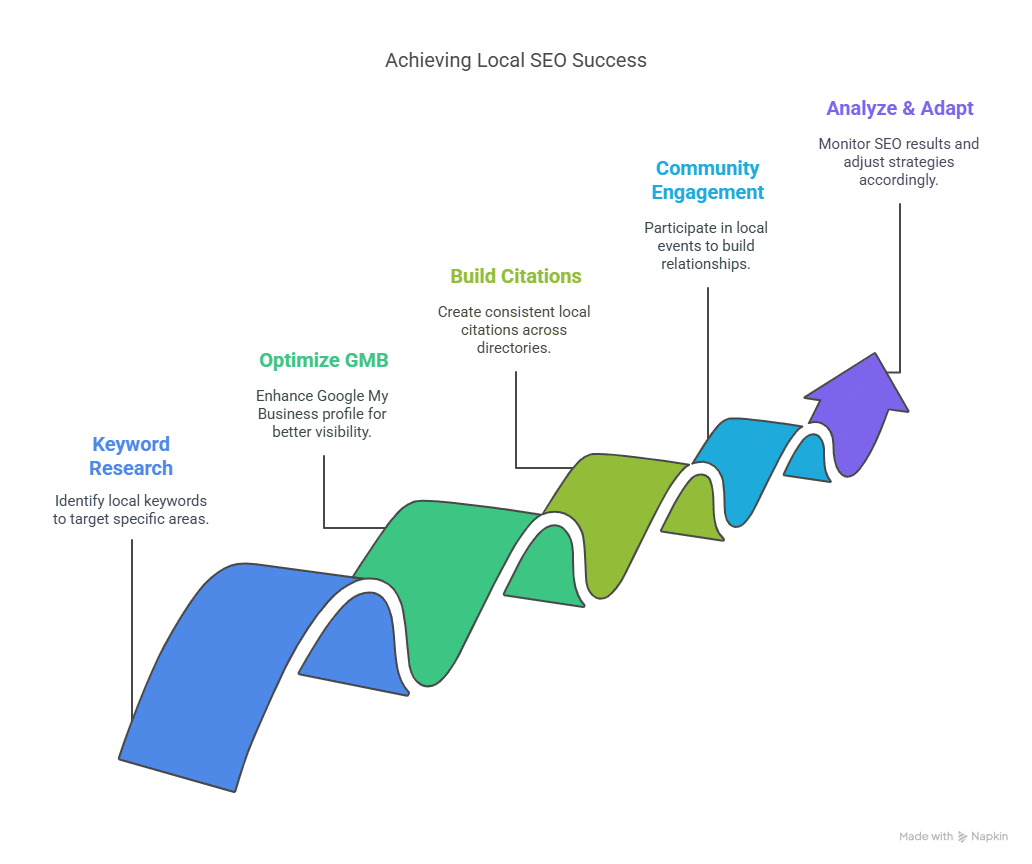
- Conduct local keyword research to target specific geographic areas and improve search rankings.
- Optimize Google My Business with accurate information and engaging posts to boost local visibility.
- Build local citations in directories and maintain NAP consistency across platforms.
- Engage with the local community through events and partnerships to foster relationships and credibility.
- Observe search engine optimization results. Modify tactics according to algorithm changes & data analysis findings.
Understanding Local SEO Basics
Understanding the fundamentals of local SEO is crucial for any business aiming to enhance its online visibility within specific geographic areas. Local SEO focuses on optimizing a business’s online presence to attract more customers from relevant local searches. Local businesses need to enhance their local search rankings. This will make them visible when potential customers search for nearby products or services.
At the core of local SEO is the careful selection and use of keywords. These keywords should reflect the products or services offered, along with the specific locations served. For instance, a bakery in downtown Los Angeles might use phrases like “best bakery in Los Angeles” or “downtown LA pastries” to improve their visibility in local searches. Incorporating these targeted keywords into website content, meta descriptions, and business listings plays a pivotal role in enhancing local search rankings.
Furthermore, consistency in business information across online platforms is vital. Ensuring that the business name, address, and phone number (NAP) are identical on the website, Google My Business, and other directories directly influences search engine confidence in the business’s legitimacy and relevance. This consistency aids in boosting visibility in local searches, as search engines prioritize accurate information.
Local businesses must also engage with customer reviews and ratings, as they significantly impact local search rankings. Positive reviews not only enhance credibility but also entice more local customers.
Identifying Target Audience

To effectively harness the power of local SEO, it is essential to clearly identify the target audience. This foundational step lays the groundwork for developing local search strategies that resonate with potential customers. By understanding the demographics, preferences, and behaviors of the community, a startup can tailor its marketing efforts to engage with local audiences more effectively.
Identifying the target audience involves a comprehensive analysis of who the local community is and what they value. Prioritizing local keyword research is a crucial part of this process, as it uncovers the specific terms and phrases that potential customers are using. This insight allows businesses to craft content that is not only relevant to your local audience but also aligns with their search intent.
By focusing on local search strategies, startups can increase visibility and foster a stronger connection with the local community. Engaging with local audiences requires more than just understanding their search habits. It involves building authentic relationships and demonstrating a genuine commitment to serving their needs. This can be achieved through personalized content, community involvement, and responsive communication channels.
Additionally, startups should leverage local events, partnerships, and collaborations to deepen their connection with the local community. Ultimately, identifying the target audience is about recognizing the unique characteristics and needs of the local population.
Conducting Keyword Research

Effective local SEO relies heavily on the strategic use of keyword research to enhance visibility and engagement within a specific geographic area. Conducting keyword research is a crucial step in developing an effective SEO strategy for startups aiming to establish a strong local presence. Understanding the nuances of local search queries allows businesses to tailor their content and offerings to meet the needs of their local audience. This process involves identifying keywords and phrases that potential customers in your vicinity are likely to use when searching for products or services relevant to your startup.
The initial stage of conducting keyword research involves brainstorming potential search terms that reflect your business’s core offerings. Utilizing tools such as Google’s Keyword Planner or SEMrush can provide valuable insights into the volume and competitiveness of these terms. By focusing on long-tail keywords that incorporate specific locations, startups can hone in on less competitive but highly targeted search queries.
Once a list of potential keywords is developed, analyzing their relevance and search volume is vital. Keywords should not only align with your business’s services but also resonate with the language and preferences of the local community. This alignment ensures that your content is both accessible and appealing to potential customers.
Incorporating these keywords into your website’s content, meta descriptions, and URLs can significantly boost your visibility in local search results. Regularly updating and refining your keyword strategy based on performance metrics will help maintain and enhance your local SEO efforts.
Through diligent keyword research, startups can effectively connect with their target audience, laying the foundation for sustained growth in their local market.
Optimizing Google My Business
After establishing a solid foundation with keyword research, enhancing your local SEO strategy involves optimizing your Google My Business (GMB) profile. This step is pivotal for any startup aiming to increase visibility in local search results. GMB serves as a digital storefront, offering potential customers essential information like your business address, operating hours, and contact details.
For startups, where SEO is crucial for gaining traction, an optimized GMB profile can significantly boost local search rankings and drive foot traffic.
To begin optimizing Google My Business, ensure all business information is accurate and up-to-date. This includes uploading high-quality images that represent your brand and services, which not only enhances your profile but also engages users visually.
Regular updates on your GMB profile, such as posts about new products or events, keep your audience informed and interested.
Encourage satisfied customers to leave reviews on your GMB page, as positive reviews play a substantial role in local SEO strategies. They influence your business’s reputation and can improve rankings in local search results.
Responding to these reviews—whether positive or negative—demonstrates your commitment to customer satisfaction and helps build trust within your community.
Another critical aspect is selecting appropriate categories for your business. This aids Google in understanding your business type and showing your listing in relevant searches.
Additionally, utilize the Q&A section by providing answers to frequently asked questions, further enhancing user experience.
Building Local Citations

Establishing local citations is a crucial step in enhancing your startup’s local SEO strategy.
These citations, essentially mentions of your startup’s name, address, and phone number (NAP) across various online platforms, play a vital role in improving your visibility in local search results.
Local citations help search engines verify the legitimacy of your startup, which can significantly boost your ranking in local search results.
Here’s how you can effectively start building local citations for your startup in the local area:
- List Your Business in Local Directories: Begin by submitting your startup’s information to local business directories. Ensure that your NAP details are consistent across all platforms to avoid confusion and enhance credibility.
- Engage with Local Influencers: Collaborating with local influencers can amplify your startup’s presence. When local influencers mention or review your business, it not only builds local citations but also enhances trust and authority within the community.
- Utilize Social Media Platforms: Platforms like Facebook, LinkedIn, and Instagram offer opportunities for building local citations. Create and optimize your business profiles, ensuring that your NAP information is accurate and visible.
- Leverage Industry-Specific Platforms: Identify and participate in industry-specific directories or platforms relevant to your startup’s niche. This targeted approach can improve your startup’s local credibility and attract a more focused audience.
Creating Engaging Local Content

Once your startup’s presence is established through local citations, the next step is to focus on creating engaging local content that resonates with your target audience. Crafting content that speaks to the community’s interests and needs not only enhances your startup’s local visibility but also strengthens relationships with potential customers.
By integrating search engine optimization (SEO) principles into your content strategy, you can ensure that your efforts reach a wider audience, ultimately driving more traffic to your site.
A crucial component of creating engaging local content involves tapping into local events and happenings. This could mean writing blog posts that offer insights into popular community gatherings, or creating guides that highlight the best local experiences.
Such content not only positions your startup as a knowledgeable and helpful resource but also naturally incorporates local keywords, boosting your search engine rankings.
Another effective approach is to collaborate with local influencers or businesses to co-create content. This strategy leverages existing networks and provides authentic endorsements, enhancing your content marketing efforts.
By featuring interviews or joint projects with well-regarded local figures, your startup can gain credibility and build trust within the community.
In addition, consider utilizing customer testimonials and case studies that focus on local success stories. Sharing real-life examples of how your startup has positively impacted the community can create a genuine connection with your audience, further solidifying your brand’s reputation.
Ultimately, creating engaging local content is about understanding and reflecting the unique character of the area your startup serves, ensuring that your message resonates with its residents.
Leveraging Social Media Channels

In today’s digital landscape, social media channels are indispensable tools for amplifying your startup’s local presence and engaging with your community. They offer unique opportunities to connect with your audience, promote local events, and drive traffic to your website, all while enhancing your SEO tactics.
To effectively leverage social media channels, consider the following strategies:
- Promote Local Events: Utilize platforms like Facebook and Instagram to create event pages and share updates about local happenings. Engaging posts about upcoming local events not only foster community involvement but also encourage followers to share your content, thus expanding your reach.
- Optimize Your Profiles: Ensure consistency across all social media platforms by using the same business name, address, and phone number as listed on your Google My Business profile. This consistency strengthens your online presence and aids search engines in verifying your startup’s legitimacy, enhancing local SEO performance.
- Engage with Your Audience: Social media is not just about posting content; it’s about interaction. Respond promptly to comments and messages, and engage in conversations. This builds trust and rapport with your audience, which can translate into increased traffic to your website and better search engine rankings.
- Utilize Hashtags and Geotags: Employ local hashtags and geotags in your posts to increase visibility among local users. This practice helps connect your content with location-based searches, making it easier for potential customers to find your startup when searching for local services or products.
Incorporating these strategies into your social media efforts can significantly bolster your startup’s visibility and local SEO success.
Encouraging Customer Reviews

For startups aiming to enhance their local SEO, encouraging customer reviews is a pivotal strategy. Reviews play an essential role in determining how a business is perceived online, influencing potential customers and search engine rankings alike. In the realm of SEO strategies for startups, the accumulation of positive reviews can significantly boost a business’s visibility on platforms like Google My Business. This visibility is crucial for startups that rely on local clientele, as search engines often prioritize businesses with high ratings and frequent customer feedback.
To effectively encourage customer reviews, startups should focus on creating memorable experiences that prompt customers to share their thoughts. Participating in local events can serve as an excellent opportunity to engage with the community, fostering relationships that lead to authentic reviews. By being present and active in the community, startups not only enhance their brand presence but also position themselves as a trusted local entity, which can lead to increased customer feedback.
Furthermore, a straightforward approach to gathering reviews involves simply asking satisfied customers to share their experiences online. This can be facilitated through follow-up emails, social media interactions, or even in-store prompts. By making the review process convenient, startups can increase the likelihood of receiving valuable feedback.
Incorporating these reviews into a broader local SEO strategy ensures that startups can leverage them to improve their ranking. SEO helps businesses maintain a competitive edge, and customer reviews are a critical component in this equation. By prioritizing customer feedback, startups can enhance their online reputation and enjoy the benefits of improved search engine visibility.
Analyzing SEO Performance

A comprehensive analysis of SEO performance is vital for startups seeking to optimize their digital strategies effectively. By understanding the nuances of local SEO and deploying appropriate SEO strategies, startups can significantly enhance their online visibility and customer reach.
Analyzing SEO involves a methodical approach to evaluating the effectiveness of SEO techniques utilized, ensuring that the business objectives align with search engine requirements.
To effectively analyze SEO performance, consider the following key steps:
- Keyword Analysis: Evaluate the keywords that are driving traffic to your site. Focus on local SEO by identifying location-specific keywords that match user intent and improve search rankings. This involves both short-tail and long-tail keyword strategies, ensuring a comprehensive approach.
- Traffic and Conversion Metrics: Utilize tools such as Google Analytics to track website traffic and conversion rates. Understanding these metrics helps determine which SEO techniques are most successful, allowing for more informed adjustments to your strategy.
- Competitor Analysis: Examine the SEO strategies employed by your competitors. This analysis can provide insights into successful techniques that can be adapted and integrated into your own local SEO efforts, giving you a competitive edge in your market.
- Technical SEO Audit: Conduct regular audits of your website’s technical SEO aspects. This includes checking for broken links, optimizing page load speeds, and ensuring mobile-friendliness, all of which contribute to improved user experience and search engine rankings.
Adapting to Algorithm Changes

As startups refine their SEO strategies through thorough analysis, the dynamic nature of search engine algorithms presents an ongoing challenge that demands continuous adaptation. For startups looking to maintain and enhance their search engine ranking, staying informed and agile is crucial. Algorithm changes can significantly impact local SEO efforts, requiring businesses to adjust their digital marketing tactics promptly. Understanding these changes and implementing strategic responses ensures that startups remain competitive in the ever-evolving digital landscape.
To navigate these challenges effectively, startups should focus on three key areas: monitoring algorithm updates, analyzing their impact, and adjusting SEO strategies accordingly. The following table illustrates these areas:
| Key Area | Action Step | Expected Outcome |
| Monitoring Algorithm Updates | Subscribe to industry news sources | Stay informed on changes |
| Analyzing Impact | Review analytics and performance data | Identify shifts in search engine ranking |
| Adjusting SEO Strategies | Implement new tactics based on insights | Maintain or improve visibility |
Startups looking to thrive in local SEO must develop a proactive approach to algorithm changes. By subscribing to reputable industry news sources and actively monitoring updates from search engines, businesses can stay ahead of the curve. Analyzing performance metrics helps in understanding how these changes affect visibility and traffic.
Adapting digital marketing strategies based on insights gained from data analysis is essential for sustaining search engine ranking. This may involve optimizing content, refining keywords, or enhancing user experience. Continuous learning and flexibility are vital in the journey to local SEO success, enabling startups to adjust swiftly and effectively to algorithm shifts. By embedding these practices, startups can ensure their digital presence remains robust and resilient amidst the fluctuations of search engine algorithms.
Final Thoughts
Local SEO success is a journey that requires consistent effort and strategic planning. By mastering the basics—such as optimizing Google My Business, conducting keyword research, and building local citations—startups can establish a solid foundation for visibility. Engaging with the local community, encouraging customer reviews, leveraging social media, and continuously analyzing SEO performance are all crucial for maintaining and enhancing local presence. Adapting to algorithm changes and refining tactics ensures that your startup remains competitive in the evolving digital landscape.
Need help achieving local SEO success for your startup? Connect with Syville Gacutan, an experienced SEO Specialist in the Philippines. Get expert guidance on optimizing your Google My Business profile, mastering local keyword strategies, and building a strong local presence. Let Syville help you drive local traffic and grow your brand effectively. Contact Syville Gacutan today!