
7 Key Strategies to Adapt to New SEO Rules
To adapt to new SEO rules effectively, start by embracing voice search optimization, focusing on conversational and local keywords.Make your website suitable for mobile devices. It should adapt to different screen sizes & load quickly.User experience should be enhanced with seamless navigation and accessible content. Implement structured data to improve search visibility and click-through rates. Maintain up-to-date and pertinent material to satisfy user requirements and adapt to algorithmic modifications. Strengthen your backlink profile with high-quality links from authoritative sources. Finally, consistently monitor algorithm updates to stay ahead. Continue exploring to gain deeper insights into these strategies.
Key Takeaways
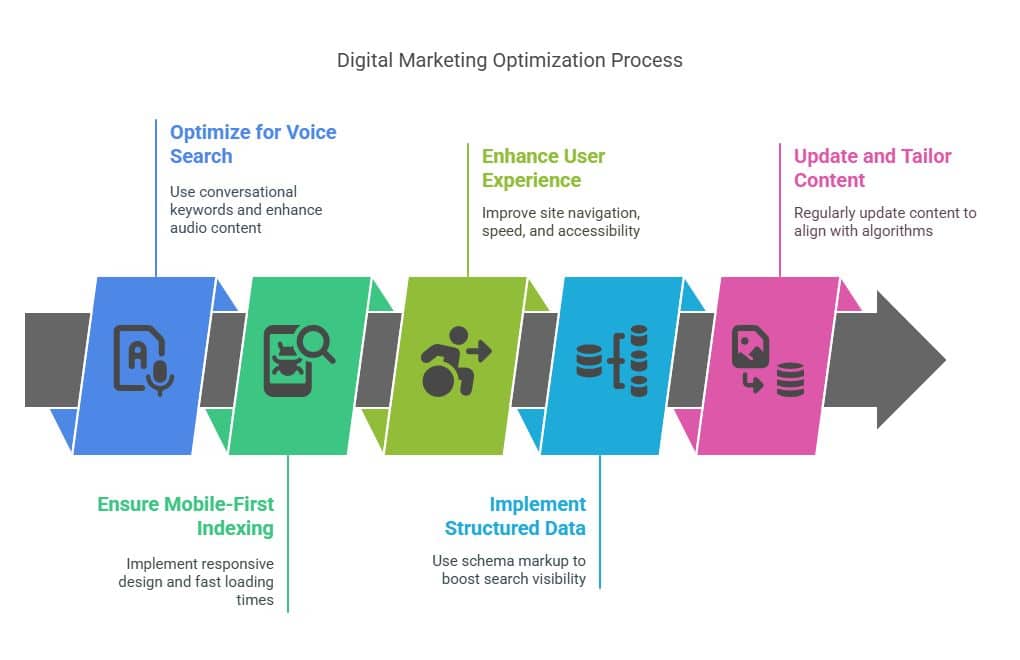
- Optimize for voice search by using conversational keywords and enhancing audio content.
- Ensure mobile-first indexing with responsive design and fast loading times for mobile users.
- Enhance user experience by improving site navigation, loading speed, and accessibility features.
- Implement structured data using schema markup to boost search visibility and click-through rates.
- Regularly update and tailor content to be relevant, engaging, and aligned with search engine algorithms.
Embrace Voice Search Optimization

In today’s digital landscape, the rise of voice-activated technology has reshaped search behavior, making voice search optimization a critical component of any effective SEO strategy. The growing prevalence of voice search trends, driven by the increasing use of virtual assistants like Amazon’s Alexa, Google Assistant, and Apple’s Siri, necessitates a shift in how businesses optimize their content for search engines.
Unlike traditional text-based queries, voice searches tend to be longer and more conversational. This change demands attention on everyday words that reflect the natural speech patterns people use when talking.
Incorporating audio content into your strategy can also enhance your visibility in voice search results. As users become more accustomed to consuming information audibly, creating podcasts, audio snippets, or other forms of audio content can position your brand as a leader in this evolving space.
Additionally, the local search impact of voice search is significant. Many users rely on voice search to find local businesses, services, or directions, often using phrases like “near me” or asking questions about specific locations. Optimizing for local SEO by ensuring accurate business listings, using local keywords, and encouraging customer reviews can bolster your presence in these queries.
Businesses need to adjust their keyword tactics & think about how voice search technology impacts user actions and content usage to properly utilize voice search optimization.
Focus on Mobile-First Indexing
As digital trends continue to evolve, the significance of mobile-first indexing emerges alongside the impact of voice search optimization in shaping effective SEO strategies. With the majority of internet users accessing content via mobile devices, search engines are prioritizing mobile-friendly websites. This approach underscores the necessity for businesses to adopt mobile optimization techniques to remain competitive and visible in search results.
Responsive design principles are central to mobile-first indexing. Ensuring that websites automatically adjust their layout and content to fit various screen sizes enhances user experience and aligns with search engine requirements. A responsive design not only improves visual appeal but also ensures content accessibility across devices, which is crucial for maintaining high search rankings.
Page speed importance cannot be overstated in the context of mobile-first indexing. Faster loading times are essential for retaining mobile users and improving overall site performance. Techniques such as image optimization and leveraging browser caching can significantly enhance page speed, consequently boosting search engine ranking potential.
Implementing Accelerated Mobile Pages (AMP) can further optimize mobile performance. AMP implementation benefits include reduced load times and improved user engagement, which are critical factors in mobile user behavior. By delivering content rapidly, AMP pages cater to the expectations of modern mobile users who demand quick and seamless browsing experiences.
Understanding mobile user behavior is vital for crafting SEO strategies that resonate with this audience. By focusing on mobile-first indexing, businesses can ensure their digital presence is robust, accessible, and aligned with the latest search engine algorithms, thereby achieving sustained online success.
Prioritize User Experience

User experience optimization is an integral component of successful SEO strategies, directly influencing website engagement and search rankings. As search engines evolve, they increasingly prioritize user-centric metrics to determine the value and relevance of a website. Enhancing user experience not only improves satisfaction but also plays a pivotal role in retaining visitors and encouraging return traffic.
A fundamental starting point is gathering user feedback to understand the needs and expectations of your audience. This data can guide improvements in website navigation, ensuring that users can effortlessly find the information they seek. Intuitive navigation reduces bounce rates and fosters longer site visits, both of which are favorable signals to search engines.
Loading speed is another critical factor in user experience. Websites with prolonged loading times can frustrate users, leading to premature exits. Optimizing images, leveraging browser caching, and minimizing server response time are effective techniques to enhance loading speed, contributing to a seamless browsing experience.
Incorporating accessibility features is essential to ensuring that your website is usable by individuals with disabilities. This not only broadens your audience but also aligns with search engines’ emphasis on inclusivity.
Features such as alt text for images, keyboard navigability, and text-to-speech options make your site more accessible and user-friendly.
Implement Structured Data
Structured data is a powerful tool that significantly enhances a website’s visibility and search engine performance. By employing structured data tools, businesses can efficiently organize their data, making it easier for search engines to understand and index web content.
Schema markup, a form of structured data, is crucial in this process as it provides explicit information to search engines about a webpage’s content. This enhances search visibility by enabling search engines to deliver more relevant results to users.
Implementing structured data effectively can lead to the appearance of rich snippets in search results. Rich snippets are enhanced listings that include additional details like ratings, prices, or images. These snippets not only make a result more visually appealing but also provide users with valuable information upfront, increasing the likelihood of click-throughs.
Here are three key strategies for implementing structured data:
- Utilize Structured Data Tools: Tools such as Google’s Structured Data Markup Helper or Schema.org‘s generator can simplify the process of adding schema markup to your website. These tools provide user-friendly interfaces to streamline the implementation.
- Focus on Data Organization: Ensure that your data is organized logically and accurately reflects the content on your site. This organization helps search engines interpret and present your data correctly, boosting your search visibility.
- Regularly Update Schema Markup: As your website content evolves, so should your schema markup. Regular updates ensure that your structured data remains relevant and effective in communicating the latest information to search engines.
Embracing structured data is a strategic move that can profoundly impact your website’s search engine performance and user engagement.
Enhance Content Relevance

Enhancing content relevance is a fundamental aspect of successful SEO strategies, allowing businesses to effectively connect with their target audience and improve search engine rankings. As search engines evolve, they prioritize content that is not only fresh but also pertinent to users’ needs and queries.
Content freshness is crucial, as it signals to search engines that the information is up-to-date and reflective of current trends or developments. Regularly updating content with new insights or data can thus significantly improve its relevance.
In addition to keeping content fresh, employing keyword variation is vital. This involves using a range of related keywords and phrases that potential customers might use when searching for products or services. By diversifying keywords, businesses can cater to a broader audience and improve their chances of ranking for various search queries.
Audience targeting is another key component in enhancing content relevance. Understanding the specific needs and preferences of the target audience allows for the creation of content that resonates with them on a deeper level, increasing engagement and retention.
This goes hand-in-hand with semantic search, where the focus shifts from keyword matching to understanding the context and intent behind a query. By aligning content with user intent, businesses can increase their visibility in search results.
Strengthen Backlink Profile

Building on the foundation of content relevance, the strength of a website’s backlink profile plays a pivotal role in SEO success. A robust backlink profile not only improves search engine rankings but also enhances a website’s credibility and niche authority. To effectively strengthen this profile, a multi-faceted approach is essential, combining strategic link building, targeted outreach tactics, and comprehensive competitor analysis.
- Link Building: At the heart of a strong backlink profile lies effective link building. This involves acquiring links from reputable websites within your niche, which signals to search engines your site’s authority. High-quality backlinks can significantly boost your site’s visibility and ranking.
- Outreach Tactics: Developing effective outreach tactics is crucial for earning valuable backlinks. This includes engaging with influencers and authoritative sites in your industry through personalized communication. Crafting compelling pitches that highlight mutual benefits can foster partnerships and lead to quality link acquisitions.
- Competitor Analysis: Conducting thorough competitor analysis is vital in understanding where your competitors are gaining their backlinks. Tools that reveal your competitors’ backlink sources can offer insights into potential opportunities for your site. By evaluating their strategies, you can identify gaps and replicate successful tactics.
Content syndication also plays a critical role in strengthening your backlink profile. By distributing your content across various platforms, you increase the likelihood of earning backlinks from diverse sources.
Ensuring your content is widely accessible amplifies its reach and potential for link acquisition.
Monitor Algorithm Updates

Staying informed about algorithm updates is crucial for maintaining a competitive edge in search engine optimization. As search engines continually evolve, keeping up with these changes through effective algorithm tracking can significantly impact your search rankings.
Regularly receiving update notifications ensures you’re aware of the latest alterations and can adjust your strategies accordingly. This proactive approach helps mitigate any negative effects that sudden changes might otherwise impose on your website’s performance.
Incorporating SEO tools into your strategy allows for efficient monitoring of algorithm updates. These tools provide real-time insights and comprehensive data analysis, enabling you to understand how changes affect your site.
By leveraging historical data, you can discern patterns and predict how future updates might influence your rankings. This insight is invaluable for making data-driven decisions that optimize your site’s visibility and searchability.
Competitor analysis plays a pivotal role in adapting to algorithm updates. By observing how your competitors respond to changes, you can identify effective strategies to implement.
This analysis not only provides insights into successful tactics but also highlights areas where your competitors may have fallen short, allowing you to capitalize on their weaknesses.
Final Thoughts
Adapting to new SEO rules requires a comprehensive approach that prioritizes user experience, content relevance, and strategic technical implementation. By embracing voice search optimization, focusing on mobile-first indexing, and leveraging structured data, businesses can stay ahead in an ever-changing digital landscape. Ensuring fast loading times, enhancing navigation, and updating content regularly help maintain user engagement and search rankings. Strengthening backlink profiles and staying informed about algorithm updates are also critical for sustaining visibility and competitiveness.
Ready to elevate your SEO game? Connect with Syville Gacutan, an SEO Specialist in the Philippines. Get expert guidance on optimizing your website for voice search, mobile-first indexing, and structured data. Let Syville help you stay ahead of algorithm changes and achieve long-term digital success. Contact Syville Gacutan today!